Fight Club is one of those films people feel certain about. Ask ten viewers what it means, and most answers arrive quickly and confidently. It’s either about rebellion, masculinity, freedom, or chaos. That certainty is exactly why the film continues to be misunderstood.
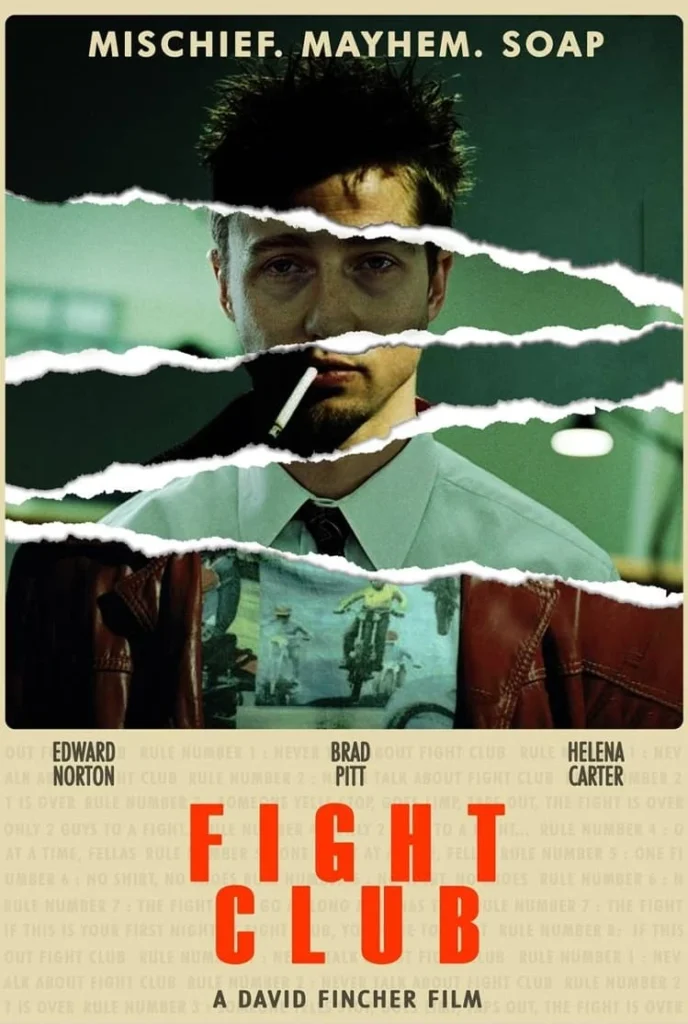
Released in 1999, Fight Club entered popular culture during a time of growing disillusionment with work, identity, and consumer life. Its imagery was loud, provocative, and impossible to ignore. Over time, those surface elements became easier to quote than the quieter ideas beneath them.
How the Film Is Commonly Read
Many viewers see Fight Club as a celebration of defiance. Tyler Durden’s speeches are often treated as philosophy, his rejection of comfort mistaken for clarity. The bare-knuckle fights, the rules, the underground rituals all appear to offer structure in a world that feels hollow.
This reading isn’t entirely wrong, but it stops too early. It accepts the film’s loudest moments at face value and ignores how deliberately unstable they are. The confidence Tyler projects is seductive, but the film never presents it as sustainable.
What the Film Is Actually Questioning
At its core, Fight Club is not asking how to escape modern life. It is asking what happens when escape becomes obsession. The narrator doesn’t gain freedom as the film progresses. He loses control. What begins as dissatisfaction slowly turns into dependency.
The film shows how easily frustration can transform into ideology. Anger finds language. Language becomes identity. Identity demands loyalty. By the time the narrator realizes what has been created, choice has already narrowed.
Fight Club is less interested in rebellion than in how people outsource responsibility. Tyler is not a solution. He is a symptom.
The Story in Brief
The story follows an unnamed narrator trapped in routine, insomnia, and emotional numbness. His encounter with Tyler Durden offers temporary relief through violence, secrecy, and belonging. What starts as personal release evolves into something far more dangerous.
As the movement grows, individual agency disappears. The film traces this shift carefully, showing how people who feel powerless can become instruments of something they no longer understand.
Performances and Emotional Weight
Edward Norton plays the narrator with restraint and confusion, grounding the film’s chaos in vulnerability. His performance makes the unraveling feel internal rather than theatrical.
Brad Pitt embodies confidence without stability. Tyler’s charm works because it feels convincing, even as it becomes hollow. Helena Bonham Carter adds emotional friction, refusing to fit neatly into either worldview the film presents.
Why the Film Still Divides Viewers
Fight Club remains misunderstood because it demands distance. It doesn’t reward identification. Viewers who take Tyler literally miss the warning embedded in his certainty. The film doesn’t condemn dissatisfaction. It questions where that dissatisfaction is allowed to lead.
What lingers is discomfort, not empowerment. Fight Club asks whether replacing one empty structure with a louder one is really freedom at all. And that question, decades later, still refuses easy answers.