Rang de Basanti begins with laughter, friendship, and youthful carelessness. What it gradually reveals is far more unsettling , the moment when awareness can no longer remain passive.
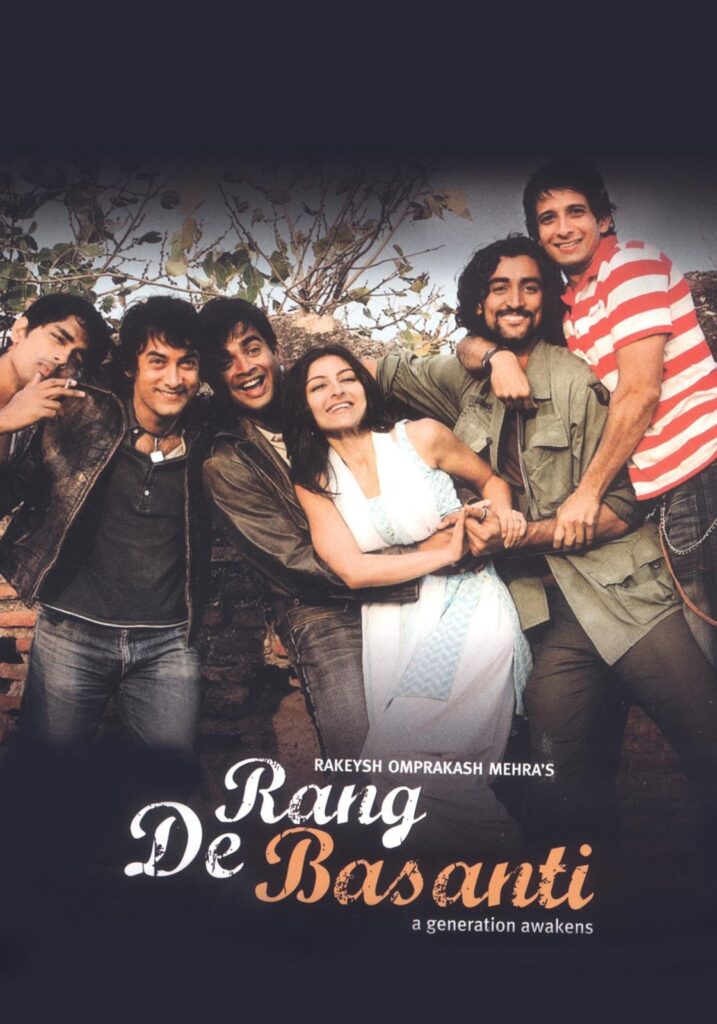
Released in 2006, the film captured a generational restlessness that was rarely addressed so directly in mainstream Indian cinema. It does not preach patriotism. Instead, it examines what happens when indifference becomes impossible.
This is not a story about heroes.
It is about people who stop looking away.
A Brief Review
The film moves deliberately from lightness to gravity. Its early humour is not a distraction but a foundation , allowing the later shift to feel earned rather than imposed.
Emotion builds through contrast: joy beside anger, friendship beside loss. The film avoids easy moral binaries, choosing discomfort over reassurance.
What makes Rang De Basanti enduring is not its slogans, but its emotional transition.
Short Story Summary
A group of carefree university friends become involved in a documentary about Indian freedom fighters, gradually stepping into the roles of revolutionaries from the past.
As parallels emerge between historical injustice and present-day corruption, personal tragedy forces them to confront their own apathy. What begins as performance turns into reflection, and reflection into action.
The film traces this transformation carefully , showing how awareness reshapes identity, and how belief demands consequence.
The Hands Behind the Film
Directed by Rakeysh Omprakash Mehra, the film balances scale with intimacy. Mehra allows political themes to emerge organically from character rather than declaration.
Music by A. R. Rahman plays a crucial role , not as background, but as emotional punctuation, bridging nostalgia, loss, and resolve.
Written by Renzil D’ Silva and Rakeysh Om Prakash Mehra screenplay anchors ideology in emotion, ensuring the film remains human even at its most confrontational.
Characters and Generational Conflict
The central characters represent a generation suspended between freedom and frustration. Their rebellion is not born from ideology, but from betrayal and grief.
Aamir Khan plays DJ with deliberate restraint. His performance avoids grand gestures, allowing the character’s transformation to feel internal rather than dramatic. DJ’s journey is less about leadership and more about awakening , the slow realisation that detachment itself is a choice.
R. Madhavan brings emotional weight to Flight Lieutenant Ajay Rathod. His character represents duty shaped by institutions, and the disillusionment that follows when integrity is betrayed. Madhavan’s quiet intensity grounds the film’s moral conflict.
Siddharth portrays Karan with vulnerability and impulsiveness. His character embodies youthful idealism pushed to its limits, reacting emotionally rather than strategically. Siddharth’s performance captures the rawness of grief and anger without romanticising it.
The characters represent a generation suspended between freedom and frustration. Their rebellion is not born from ideology, but from betrayal and grief.
The transformation is collective rather than individual , suggesting that change is rarely heroic in isolation, but communal in nature.
Their choices are flawed, impulsive, and deeply human.
Why It Stays
Rang De Basanti stays because it refuses comfort.
It asks:
- What do we owe the freedoms we inherit?
- When does silence become complicity?
- Can awareness exist without action?
The film does not offer solutions.
It offers responsibility.
Long after its release, Rang De Basanti continues to resonate because it captures the moment when idealism collides with reality , and demands a response.
That unresolved tension is why the film endures.
Nicely written