Psycho does not begin with menace. It begins with ordinary movement — a drive, a pause, a place to rest. Nothing warns you that fear has already entered the frame.
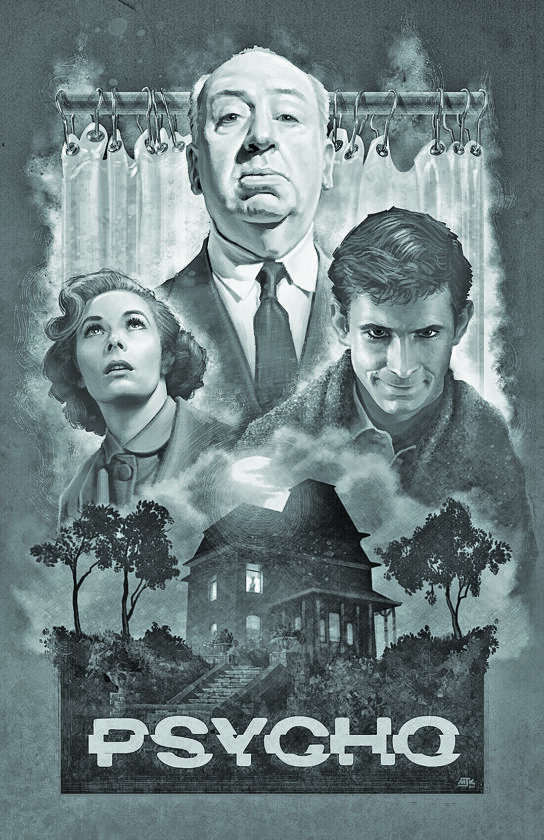
Released in 1960, the film quietly dismantled the idea that horror must arrive loudly. Instead, it suggested something far more disturbing: that danger can exist within routine, politeness, and calm conversation.
Psycho does not chase the audience.
It waits.
A Brief Review
The film is meticulously controlled. It withholds information, redirects attention, and allows tension to form through absence rather than action. There are no shortcuts to fear , only careful placement of silence and expectation.
What makes the experience lasting is not shock, but psychological closeness. The viewer is not overwhelmed, but slowly drawn into an atmosphere where certainty erodes scene by scene.
Fear here is not explosive.
It is quietly invasive.
Short Story Summary
The story initially follows a simple act of escape , a woman stepping outside the boundaries of her ordinary life. Her journey leads her to a remote motel, seemingly uneventful, almost comforting in its anonymity.
From this point, the film begins to shift. Narrative focus fractures. Familiar structure dissolves. The audience is forced to reorient itself as motivations blur and identity becomes unstable.
The motel ceases to be a location and becomes a psychological space , one shaped by control, repression, and isolation. What unfolds is less about violence and more about what has been hidden for too long.
The Hands Behind the Film
Directed by Alfred Hitchcock, Psycho reflects a filmmaker deeply interested in how audiences observe and assume. Hitchcock manipulates expectation with precision, guiding viewers toward comfort before quietly withdrawing it.
Every technical choice serves restraint. Camera placement, editing, and rhythm work together to confine rather than overwhelm. The film never insists on fear , it allows it to surface naturally.
The score cuts rather than supports, interrupting calm and reinforcing psychological fracture.
Characters and Psychological Fracture
The characters in Psycho exist at a distance from one another, and from themselves. Communication feels guarded, emotions restrained, intentions incomplete.
The central figure is not framed as monstrous, but as fragmented , shaped by repression rather than spectacle. This refusal to simplify psychology is what makes the film deeply unsettling without excess.
The discomfort arises not from what is shown, but from what becomes gradually recognisable.
Why It Stays
Psycho stays because it changed where fear lives.
It suggests that:
- Danger does not need warning signs
- Control can disguise instability
- The familiar can be the most vulnerable
The film offers no catharsis and no moral distance.
It keeps fear uncomfortably near.
More than six decades later, Psycho continues to resonate because it transformed suspense from an external threat into an internal experience , one that lingers long after the screen goes dark.
That quiet transformation is its enduring power.
Nicely written
Pingback: The Haunting (1963): When a House Becomes the Story - framesandfeelings.com