Inception is often remembered for its complexity, but its emotional core is surprisingly intimate. Beneath the layered dreams and shifting realities lies a story about guilt, memory, and the human need for closure.
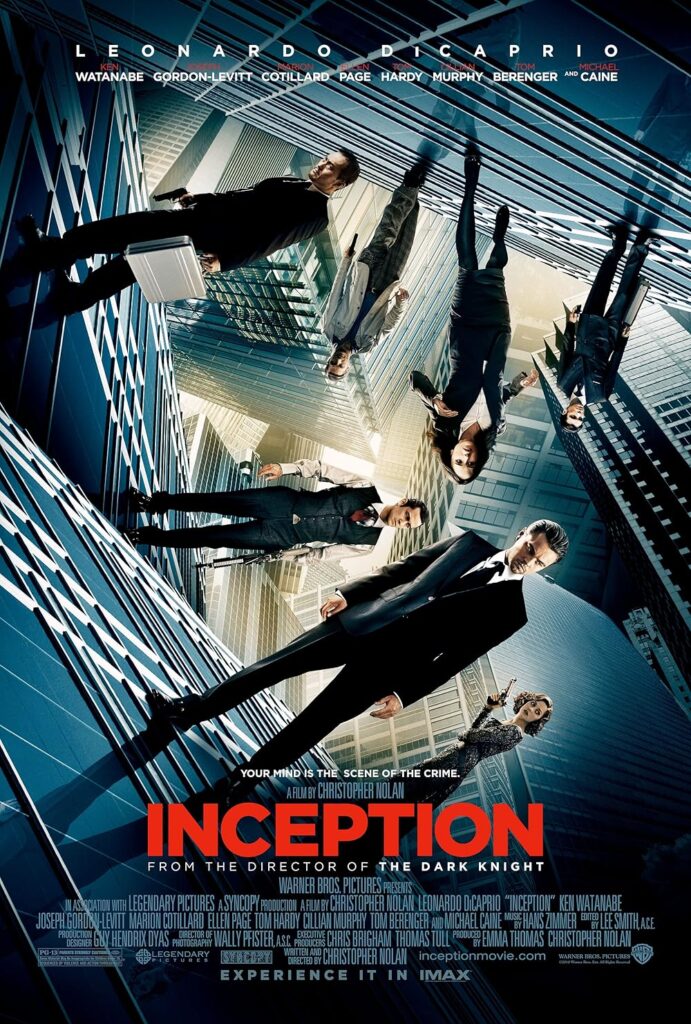
Released in 2010, the film arrived during a period of growing fascination with nonlinear narratives and high-concept cinema. Instead of using complexity as spectacle alone, Inception uses it to mirror the mind of a man unable to let go.
This is not a film about dreams.
It is a film about control.
A Brief Review
The film balances precision with emotion, allowing its elaborate structure to support — rather than overwhelm — the story. Its pacing is deliberate, building tension through rhythm and repetition rather than constant escalation.
What makes Inception endure is not its puzzles, but its restraint. The film trusts the audience to sit with ambiguity, refusing to provide emotional certainty even as it resolves narrative threads.
The experience feels immersive without being instructive.
Short Story Summary
The story follows a skilled extractor who enters dreams to steal information, living in a state of perpetual motion and emotional exile. He is haunted by memories that intrude into every constructed reality, blurring the boundary between intention and regret.
When offered a chance at redemption through an unprecedented task — planting an idea rather than stealing one — he accepts, knowing the risk is not failure, but confrontation. As layers of dreams unfold, the journey becomes less about success and more about release.
The narrative progresses inward, toward reckoning rather than resolution.
The Hands Behind the Film
Written and directed by Christopher Nolan, Inception reflects a fascination with time, perception, and subjective truth. Nolan’s direction emphasises structure, but never at the expense of emotional coherence.
Music by Hans Zimmer reinforces tension through repetition and scale, grounding the film’s abstract layers with a sense of inevitability.
Craft here serves psychology.
Characters and Emotional Weight
The central character, played by Leonardo DiCaprio, is defined by restraint rather than heroism. His emotional distance is not arrogance, but protection — a refusal to confront unresolved loss.
Supporting characters function less as individuals and more as reflections of belief, doubt, and responsibility. Each represents a different relationship with control, allowing the story to examine agency from multiple angles.
Emotion emerges through tension, not expression.
Why It Endures
Inception endures because it respects uncertainty.
It asks:
- Can reality be trusted when memory interferes?
- Is control a form of safety or avoidance?
- What happens when letting go threatens identity itself?
The film’s final moment refuses confirmation, not to provoke debate, but to preserve meaning. It suggests that certainty is less important than acceptance.
That unresolved stillness is why Inception continues to resonate — not as a puzzle to solve, but as an experience to revisit.
Nicely written
Pingback: Interstellar (2014): Love, Time and the Weight of Leaving - framesandfeelings.com
Pingback: The Dark Knight (2008): When Doing Right Comes at a Cost - framesandfeelings.com