The first thing Gladiator establishes is loss. Not spectacle, not scale, but absence. Before the crowds roar and the arena fills, the film grounds itself in what has already been taken away. Everything that follows grows out of that quiet fracture.
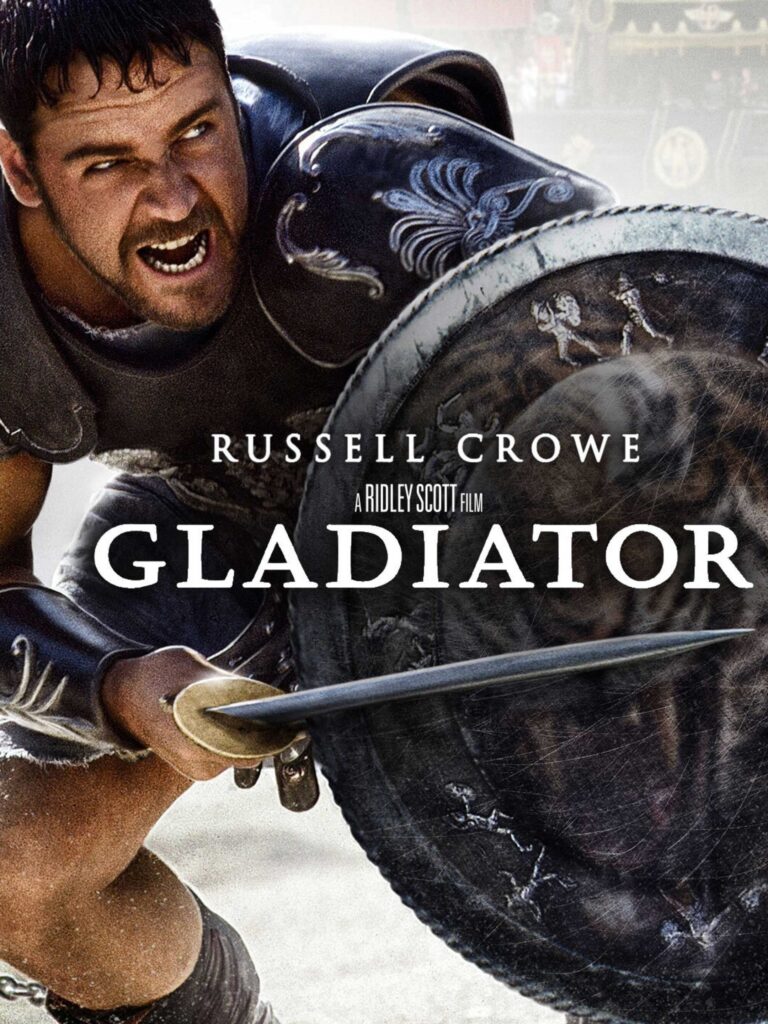
Released in 2000, Gladiator arrived as a historical epic at a time when such films were rare. Yet it does not rely on nostalgia or grandeur alone. Its emotional weight comes from restraint, from focusing on a man stripped of identity and forced to exist within a system designed for entertainment rather than justice.
How the Film Feels
Watching Gladiator feels solemn, even during its most violent moments. The film understands that violence, when repeated, loses its power to shock and instead reveals exhaustion. The arena becomes less a place of thrill and more a space of ritualized suffering.
What stayed with me was the sense of quiet dignity that persists beneath the spectacle. Even when surrounded by noise and cruelty, the film holds onto stillness. It allows grief to coexist with resolve, without rushing toward triumph.
The Story in Brief
The story follows Maximus, a respected Roman general whose loyalty places him in conflict with a corrupt heir to the throne. Betrayed and left for dead, he is captured and sold into slavery, forced to fight for survival as a gladiator.
As Maximus rises within the arena, his identity shifts in the eyes of the public. What begins as survival slowly turns into resistance. The film traces how personal loss becomes a symbol, and how the spectacle meant to distract the masses becomes a platform for reckoning.
The Hands Behind the Film
Director Ridley Scott balances scale with intimacy. The film’s grand settings never overpower its emotional core. Battles are framed with clarity, but they serve character rather than overshadow it.
The pacing allows moments of silence to interrupt chaos. These pauses give space for reflection, reminding the viewer that the cost of violence extends beyond the immediate act. The direction consistently returns to emotion after spectacle.
Characters and Performances
Russell Crowe anchors the film with restraint. His performance relies more on presence than dialogue, conveying grief and resolve through physical stillness. His Maximus feels grounded, shaped by memory rather than rage.
Joaquin Phoenix brings instability and insecurity to Commodus, presenting power as something deeply fragile. Connie Nielsen adds emotional restraint, offering contrast through quiet endurance rather than confrontation. Together, the performances keep the film emotionally anchored.
Why It Endures
Gladiator endures because it understands that dignity is not about victory. It is about refusing to surrender one’s values, even when the world rewards cruelty.
What lingers is not the roar of the crowd, but the silence after it fades. The idea that systems built on spectacle eventually reveal their emptiness. Gladiator stays because it treats honor not as glory, but as something carried quietly, often at great cost.
Check out another great film from World Cinema Gone With the Wind (1939)