Schindler’s List does not try to overwhelm from the start. It begins quietly, almost cautiously, as if aware of the weight it carries. The film approaches its subject with restraint, letting moments speak rather than forcing emotion.
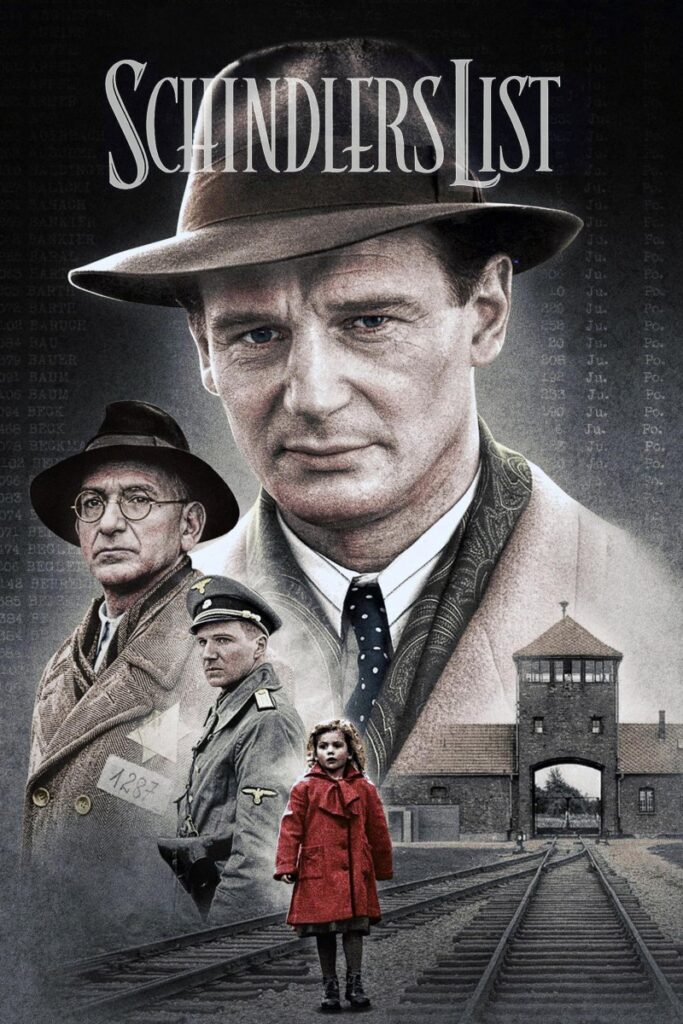
Released in 1993, the film looks back at one of history’s darkest chapters, but it does so through individual lives rather than statistics. It does not attempt to explain the Holocaust in full. Instead, it narrows its focus, showing how survival, cruelty, and compassion exist side by side.
How the Film Feels
Watching Schindler’s List feels heavy, but not manipulative. The film allows silence to do much of the work. Long pauses, still frames, and restrained movement create space for reflection.
What stayed with me was the sense of helplessness that quietly builds. The film does not offer the relief of distance. It places the viewer close to ordinary people trapped in extraordinary cruelty. The absence of sentimentality makes the experience more difficult, but also more honest.
The Story in Brief
The story follows Oskar Schindler, a businessman who arrives in occupied Poland seeking profit. Initially indifferent to suffering around him, he benefits from the system that exploits Jewish labor.
Over time, exposure to brutality begins to change him. What starts as self-interest slowly shifts into responsibility. The film traces this transformation carefully, focusing on actions rather than declarations. Schindler’s efforts to save lives emerge not as heroics, but as necessary responses to unbearable injustice.
The Hands Behind the Film
Director Steven Spielberg chooses restraint over spectacle. Despite the scale of history involved, the film remains intimate. The decision to shoot primarily in black and white strips away distraction, leaving emotion exposed.
The pacing is deliberate, allowing scenes to unfold without urgency. Violence is present, but never stylized. The direction respects the gravity of the subject by refusing to sensationalize it.
Characters and Performances
Liam Neeson portrays Schindler with quiet complexity. His performance avoids sudden redemption, instead showing gradual moral awakening. The restraint makes his final realization deeply affecting.
Ralph Fiennes delivers a chilling performance as Amon Göth, presenting cruelty as casual and normalized. Ben Kingsley provides emotional grounding, representing dignity and resilience in the face of dehumanization. Together, the performances avoid exaggeration, keeping the story rooted in reality.
Why It Endures
Schindler’s List endures because it understands that history is shaped not only by grand movements, but by individual decisions. The film does not claim that one man can undo immense suffering. It suggests something quieter, yet profound.
That even small acts of courage matter. That choosing compassion, even late, still holds meaning. The film stays with you not because of what it shows, but because of what it asks you to consider about responsibility, memory, and the cost of looking away.