Pulp Fiction does not begin by orienting the viewer. It drops you into conversations already in motion, moments already unfolding, and trusts you to catch up. The film resists linear comfort, choosing fragmentation over flow, and in doing so, reshapes how stories can be told.
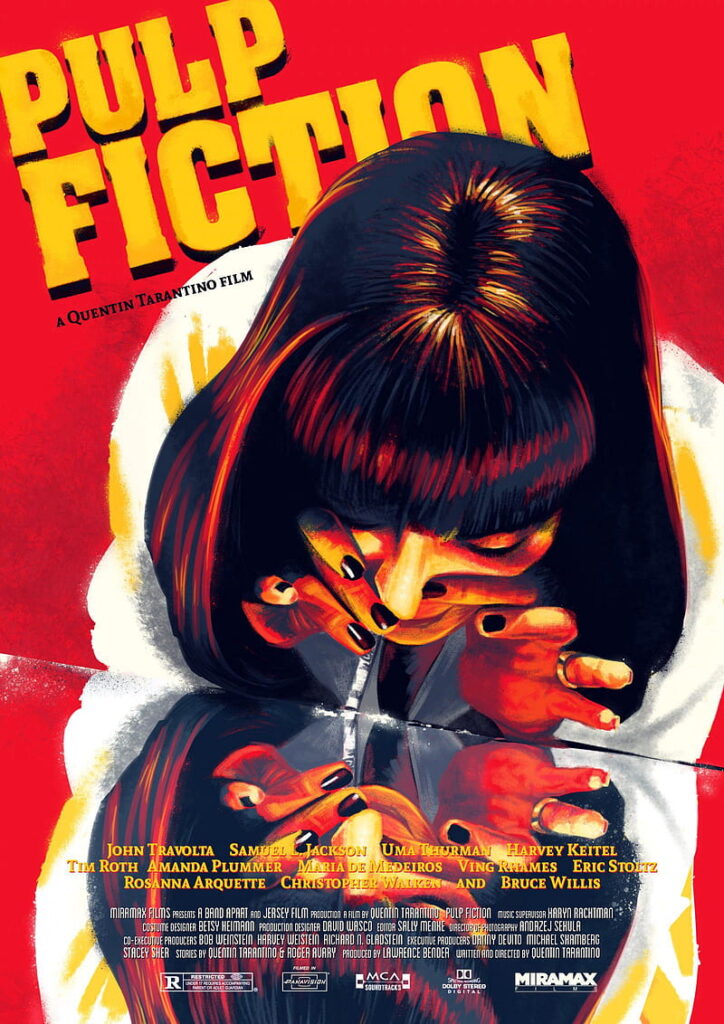
Released in 1994, the film arrived with a confidence that felt disruptive. It did not explain itself or soften its edges. Instead, it treated the audience as an active participant, asking them to assemble meaning from pieces rather than receive it whole.
How the Film Feels
Watching Pulp Fiction feels unpredictable, but never careless. The film moves between humor and violence, casual talk and sudden consequence, without warning. That instability keeps you alert. You are never fully settled, even during its quieter moments.
What stayed with me was how ordinary everything feels, even when it shouldn’t. Conversations drift into pop culture, food, and small annoyances, existing alongside moments of extreme danger. The contrast makes the violence feel sharper, not stylized, because it interrupts something familiar.
The Story in Brief
The film weaves together multiple stories involving criminals, lovers, and chance encounters. There is no single protagonist guiding the narrative. Instead, characters cross paths, disappear, and reappear in unexpected ways.
By rearranging time, the film allows consequences to surface before causes, and redemption to appear where it least seems possible. The story is less about destination and more about moments, showing how lives briefly collide and leave lasting impressions.
The Hands Behind the Film
Director Quentin Tarantino approaches storytelling with deliberate confidence. The structure is bold, but it is tightly controlled. Each scene stands on its own, yet contributes to a larger rhythm.
Dialogue plays a central role. Conversations stretch, wander, and circle back, creating tension without relying solely on action. The direction trusts language and pacing to hold attention, even when nothing visibly urgent is happening.
Characters and Performances
John Travolta brings unexpected vulnerability to his role, grounding the character beneath surface coolness. His performance feels relaxed, allowing humor and hesitation to coexist naturally.
Samuel L. Jackson delivers one of the film’s most memorable presences, balancing authority with reflection. Uma Thurman adds restraint and mystery, commanding attention without excess. The ensemble works because no one performance overwhelms the others.
Why It Stays
Pulp Fiction stays because it understands that meaning does not always come from order. Sometimes it emerges from collision, repetition, and chance. The film does not moralize loudly. It observes, allowing moments to linger without explanation.
What endures is its trust in the audience. It assumes patience, curiosity, and attention. By refusing to guide every reaction, the film invites viewers to return, noticing something different each time. That openness is why Pulp Fiction continues to feel alive, even decades later.