12 Angry Men begins in a closed room, under heat, impatience, and routine. A verdict is expected quickly. The case seems simple. Most of the men are ready to leave.
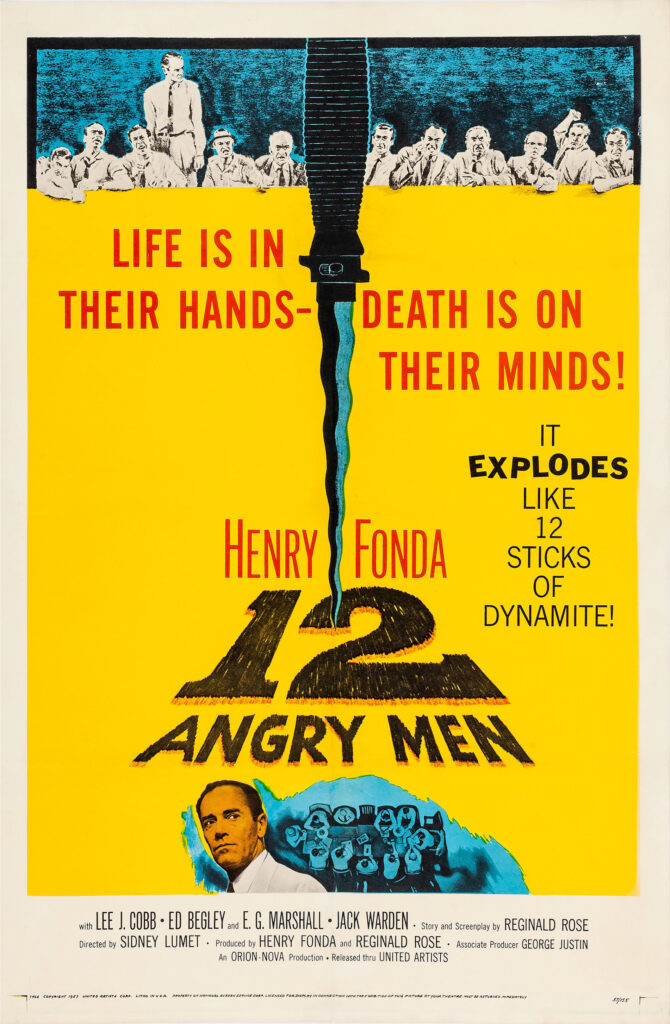
Released in 1957, the film relies almost entirely on dialogue to carry the full weight of drama. There are no distractions here. No music pushing emotion. Just people, words, and the pressure of deciding someone else’s fate.
Being Inside the Film
Watching 12 Angry Men feels uncomfortable in a quiet way. Voices overlap. Tempers rise. Silences stretch. The room begins to feel smaller as opinions harden.
What struck me was how ordinary the tension felt. These are not villains or heroes. They are tired men, carrying habits, assumptions, and personal baggage into a decision that demands care.
The Story in Brief
The film follows twelve jurors tasked with deciding the fate of a teenage boy accused of murder. An initial vote points strongly toward guilt, and the process seems close to finished.
One juror asks for discussion before a final decision. As the men revisit evidence and question testimony, doubts begin to surface. Personal biases, past experiences, and impatience interfere with logic. The story follows how certainty slowly gives way to responsibility.
The Hands Behind the Film
Director Sidney Lumet keeps the camera mostly confined to the jury room, allowing tension to build naturally. As the film progresses, framing tightens and movement becomes restricted, mirroring the growing pressure.
The direction never distracts from the words. It trusts conversation to do the work.
Characters and Performances
Henry Fonda plays the dissenting juror with calm restraint. His performance is not about dominance, but persistence. He listens more than he speaks, which makes his presence powerful.
The supporting performances give the room texture. Each juror feels shaped by a life outside the room, even though we never see it. Their conflicts feel personal, not theatrical.
What It Leaves Behind
12 Angry Men stays with me because it slows everything down. It reminds us how easy it is to decide quickly, and how hard it is to decide carefully.
The film isn’t really about guilt or innocence. It’s about taking responsibility when it would be easier not to. About choosing patience over convenience. About the quiet courage it takes to say, “I’m not sure yet,” when everyone else is ready to move on.
Long after it ends, the film leaves you with a simple question that has nothing to do with law or cinema.
When the moment comes, will you rush, or will you stay and think a little longer?