Interstellar begins with a quiet sense of loss. The Earth feels tired. Dreams feel smaller. The film does not rush into space. It spends time reminding you what is at stake before anyone leaves the ground.
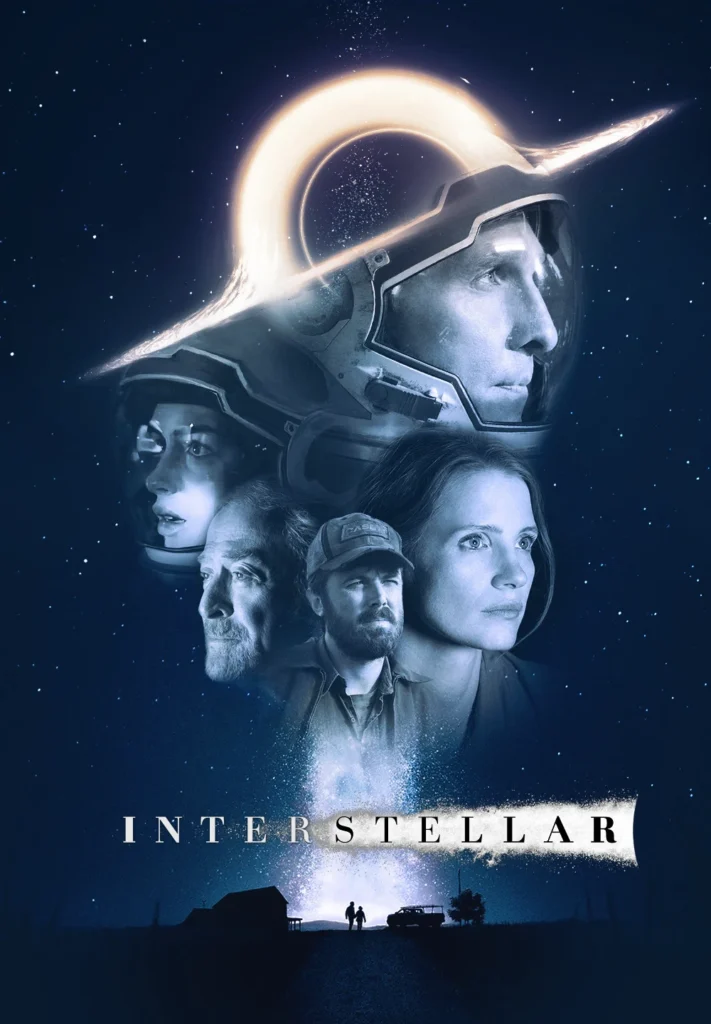
Released in 2014, Interstellar arrived as a large scale science fiction film that was willing to pause and reflect. Even with its ambition, it often feels intimate. The story never forgets that space travel here is not about discovery alone. It is about what is left behind.
This is not a film driven by spectacle.
It is driven by separation.
How the Film Feels
Watching Interstellar feels heavy in an unexpected way. The vastness of space is impressive, but the emotional weight comes from time passing unevenly. Minutes stretch into years. Simple decisions carry irreversible consequences.
What stayed with me was the loneliness. Not the dramatic kind, but the quiet kind. The kind that comes from knowing you might never return to the life you understand. The film lets that feeling sit without rushing past it.
Space feels beautiful, but it also feels unforgiving.
The Story at Its Core
The story follows a former pilot drawn into a mission to find a future for humanity beyond Earth. The journey takes him farther from home with every step, not just physically, but emotionally. The science becomes complex, but the motivation remains simple.
At its heart, the film is about time and how it reshapes relationships. Years are lost. Children grow up. Promises stretch thin. The film asks whether love can survive distances that logic cannot bridge.
The answer is not neat, and the film is better for it.
The Hands Behind the Film
Director Christopher Nolan balances scale with restraint just like his 2010 film Inception. The film is ambitious, but it often chooses stillness over noise. Silence is used carefully, especially in space, where absence becomes part of the storytelling.
Music by Hans Zimmer carries much of the film’s emotional weight. The score does not underline scenes. It lifts them slowly, giving moments a sense of inevitability rather than drama.
The craft works because it trusts patience.
Performances and Emotional Grounding
Matthew McConaughey anchors the film with sincerity. His performance never feels distant, even when surrounded by vast concepts. The emotional conflict feels immediate and human.
Anne Hathaway brings vulnerability and conviction, especially when the film allows emotion to challenge logic. Her presence keeps the story from becoming purely theoretical.
Together, the performances keep the film grounded, even when it reaches for the abstract.
Why It Stays With You
Interstellar stays because it refuses to treat science and emotion as opposites.
It suggests that:
- progress comes with loss
- time is never neutral
- love is not logical, but it is persistent
The film ends on a note that feels unresolved, but honest. Interstellar does not offer comfort. It offers reflection. And that quiet weight is what lingers long after the final image fades.