Collateral feels anxious from its very first moments. There is something cold in the way it looks at the city, as if Los Angeles itself is watching rather than welcoming. The film does not build toward chaos slowly. It drops you into it and keeps moving.
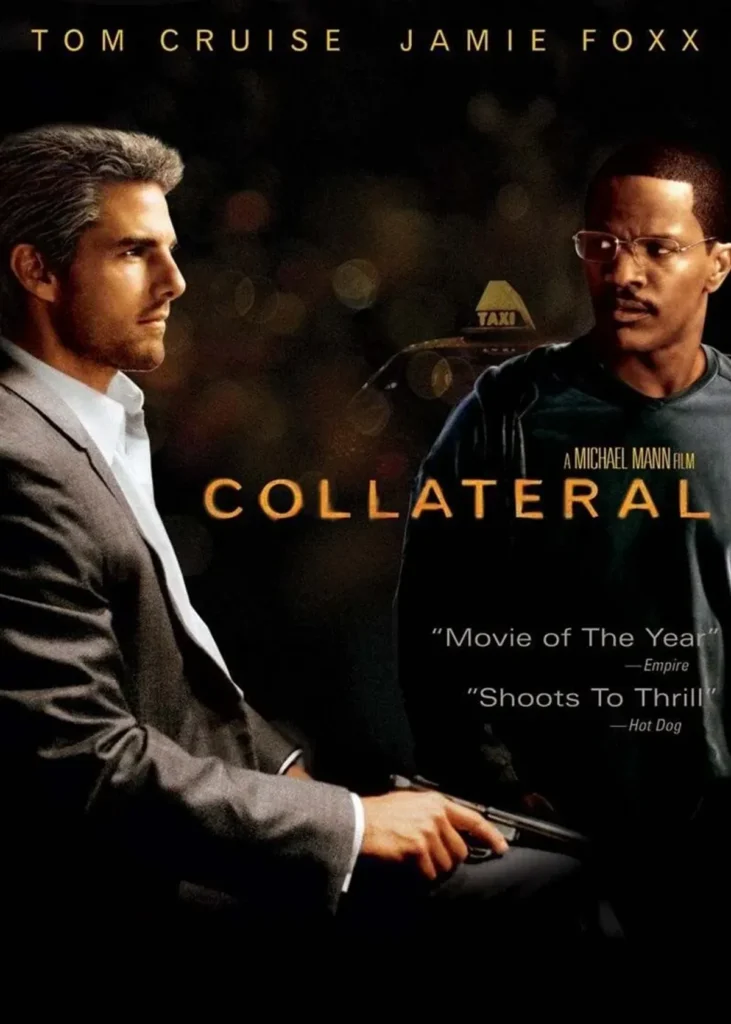
Released in 2004, Collateral still feels sharp and troubling. What stands out now is how chastised it remains despite its premise. There is no grand setup, no cinematic comfort. Everything unfolds over a single night, and the film never lets you forget how long that night feels.
This is not a crime film about viciousness.
It is about proximity to peril.
How the Film Feels
What struck me most while watching Collateral was how intimate the tension feels. Much of the film takes place inside a taxi. Conversations happen inches apart. Silence feels heavy. The city passes by, apathetic to what is unfolding inside the car.
The film rarely raises its voice. Instead, it tightens gradually. Even moments of action feel controlled, as if escape is always just out of reach. The night stretches on, and exhaustion becomes part of the experience.
It feels less like watching a story and more like being trapped inside someone else’s decisions.
The Story at Its Core
A cab driver picks up a passenger who turns out to be a contract killer completing a list of hits before sunrise. What begins as a routine ride turns into forced companionship. The driver becomes both witness and participant, unable to leave without consequence.
The story is simple on paper, but the film is more interested in what happens between events. Conversations drift into philosophy, regret, and the illusion of choice. The question is not whether the night will end, but who will still be the same when it does.
The Hands Behind the Film
Director Michael Mann brings a stark, observational style to the film. The digital cinematography captures the city in a raw, almost documentary way. Los Angeles feels alive but emotionally distant, a place where lives intersect briefly and move on.
The pacing is controlled and deliberate. Mann avoids excess, letting stillness carry as much weight as movement. The craft never distracts from the tension. It sharpens it.
Performances and Presence
Tom Cruise delivers one of his most restrained performances. His character is calm, articulate, and unsettling precisely because he does not appear chaotic. The danger lies in how normal he seems.
Jamie Foxx grounds the film emotionally. His performance carries hesitation, fear, and quiet resistance. The transformation he undergoes does not feel heroic. It feels forced, reluctant, and human.
Their dynamic is the film’s engine. Without it, the night would collapse.
Why It Stays With You
Collateral lingers because it refuses easy conclusions.
It suggests that:
- chance shapes lives more than plans
- proximity can be more dangerous than intention
- survival sometimes means changing in ways you did not choose
The film ends, but the unease does not fully leave. That lingering discomfort is intentional. Collateral is not meant to comfort. It is meant to stay with you.
Good observation