Everything Everywhere All at Once begins like it is trying to overwhelm you on purpose. Scenes pile up. Ideas collide. Tones shift without warning. At first, it almost feels like the film is daring you to give up.
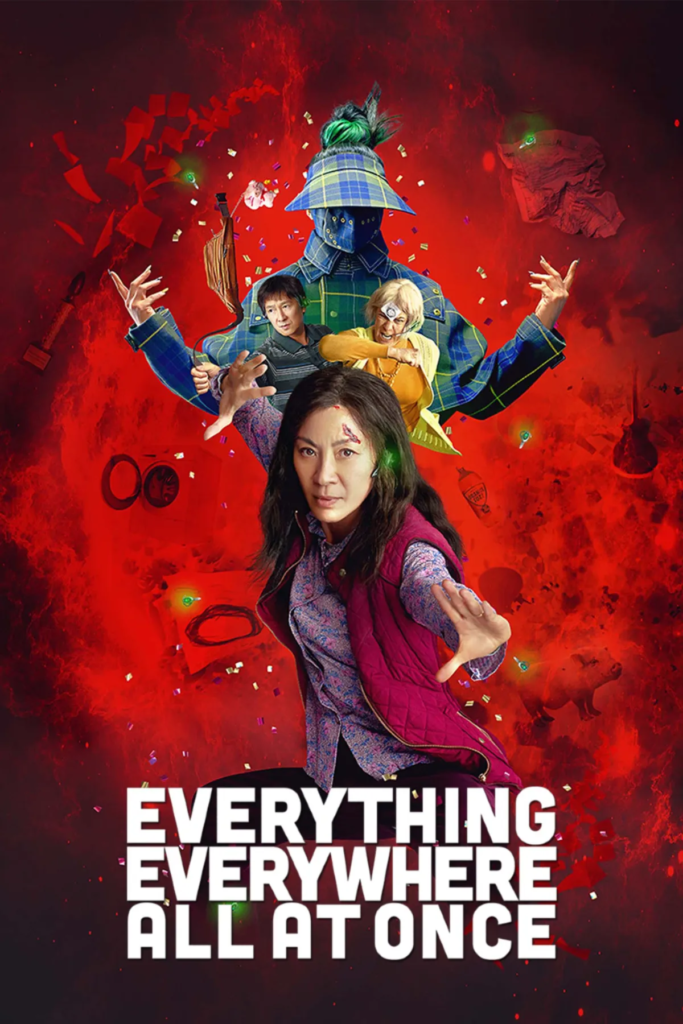
Released in 2022, the film does not ease the audience into its world. It throws everything at you immediately, trusting that confusion is part of the experience. Only later does it reveal that this excess is not random but carefully shaped.
This is not a multiverse story about scale.
It is about emotional overload.
How the Film Feels
Watching it, I remember feeling slightly exhausted in the early sections. The film moves fast and refuses to pause. But somewhere in the middle, something changes. The chaos starts to feel purposeful. The noise begins to carry weight.
What surprised me most was how the film slows down emotionally while remaining visually frantic. Even as universes collide, the core of the story becomes smaller and more intimate. The mess starts to feel familiar.
That shift is where the film finds its footing.
The Story Beneath the Spectacle
At its centre, the film follows an ordinary woman overwhelmed by responsibilities, regrets, and relationships. The multiverse becomes a metaphor rather than a plot device. Each alternate version reflects a path not taken, a choice avoided, or a life imagined.
The story does not ask whether one version of life is better than another. It asks whether meaning can exist at all when everything feels possible and nothing feels stable.
The answer is quieter than expected.
The Hands Behind the Film
Directors Daniel Kwan and Daniel Scheinert treat excess as a language rather than a gimmick. Their direction allows absurdity and sincerity to coexist without cancelling each other out. The film never apologises for its weirdness, and it never hides from its emotions.
The editing plays a crucial role in maintaining coherence amid chaos. Rapid transitions never feel careless. There is intention beneath every shift, even when it looks unruly.
The craft works because it serves feeling, not spectacle.
Performances and Emotional Core
Michelle Yeoh anchors the film with restraint and vulnerability. Her performance grounds the chaos, giving the audience something human to hold onto when everything else spirals.
Ke Huy Quan brings warmth and sincerity that quietly reshapes the film’s emotional direction. His presence softens the noise, reminding the viewer what the story is really about.
Stephanie Hsu captures the weight of emotional distance and generational tension without turning it into melodrama.
Why It Resonates
Everything Everywhere All at Once stays with you because it eventually stops trying to impress and starts trying to understand.
It suggests that meaning does not come from infinite possibility, but from choosing to care anyway. In the middle of disorder, it finds something unexpectedly gentle.
That contrast is what gives the film its power.