Taare Zameen Par is not a film about learning difficulties alone. It is a film about attention — about what happens when a child is seen only for what he cannot do, and never for what he feels.
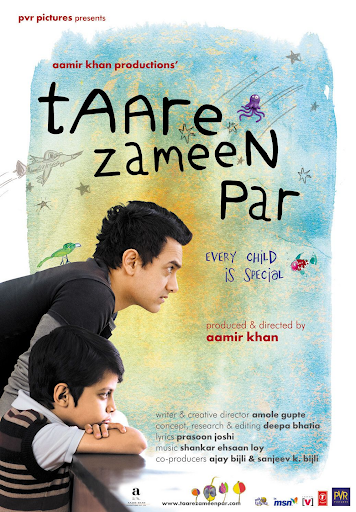
Released in 2007, the film arrived at a time when academic success was often treated as the sole measure of worth. Instead of challenging that belief loudly, the film chooses quiet observation, asking the viewer to slow down and notice.
This is not a film about fixing a child.
It is a film about changing the gaze of adults.
A Brief Review
The film moves with restraint, resisting sentimentality even when emotions run deep. Its strength lies in patience — allowing discomfort, silence, and misunderstanding to exist without rushing toward resolution.
Rather than offering easy inspiration, Taare Zameen Par holds a mirror to systems that value performance over perception. Its emotional impact comes not from dramatic moments, but from recognition — the realisation of how often empathy is delayed.
Short Story Summary
The story follows a young boy who struggles in school, unable to meet expectations imposed without understanding. His inner world — rich with imagination and sensitivity — remains invisible to those around him.
As he is pushed further into isolation, the film traces the emotional cost of neglect disguised as discipline. The arrival of a teacher who chooses to observe rather than judge begins a shift — not by altering the child, but by reframing how adults respond.
The narrative unfolds as a gradual reclaiming of dignity.
The Hands Behind the Film
Directed by Aamir Khan, the film reflects a deliberate choice to prioritise emotional truth over spectacle. The direction remains unobtrusive, allowing the child’s experience to remain central.
Music by Shankar–Ehsaan–Loy supports the film gently, expressing emotion without excess. Songs emerge as extensions of the child’s inner life rather than interruptions.
Craft serves empathy.
Characters and Emotional Perspective
The child at the centre of the film is portrayed not as a problem to be solved, but as a person to be understood. His silence, confusion, and creativity are treated with seriousness rather than pity.
The teacher’s role is defined not by authority, but by attention — the willingness to listen, observe, and respond without haste. Their relationship becomes the emotional axis of the film.
Understanding replaces correction.
Why It Stays
Taare Zameen Par stays because its question remains unresolved.
It asks:
- How many children are unheard because they do not conform?
- When does discipline become neglect?
- What responsibility do adults carry in shaping self-worth?
The film does not offer simple solutions.
It offers awareness.
Years later, it continues to resonate because it reminds viewers that education is not merely instruction — it is recognition. The film’s quiet insistence on empathy is what allows it to endure.
That insistence is its lasting power.
Good