WALL·E is a rare film that speaks most clearly when it says almost nothing. Long before dialogue appears, it communicates isolation, routine, and longing through movement, sound, and silence.
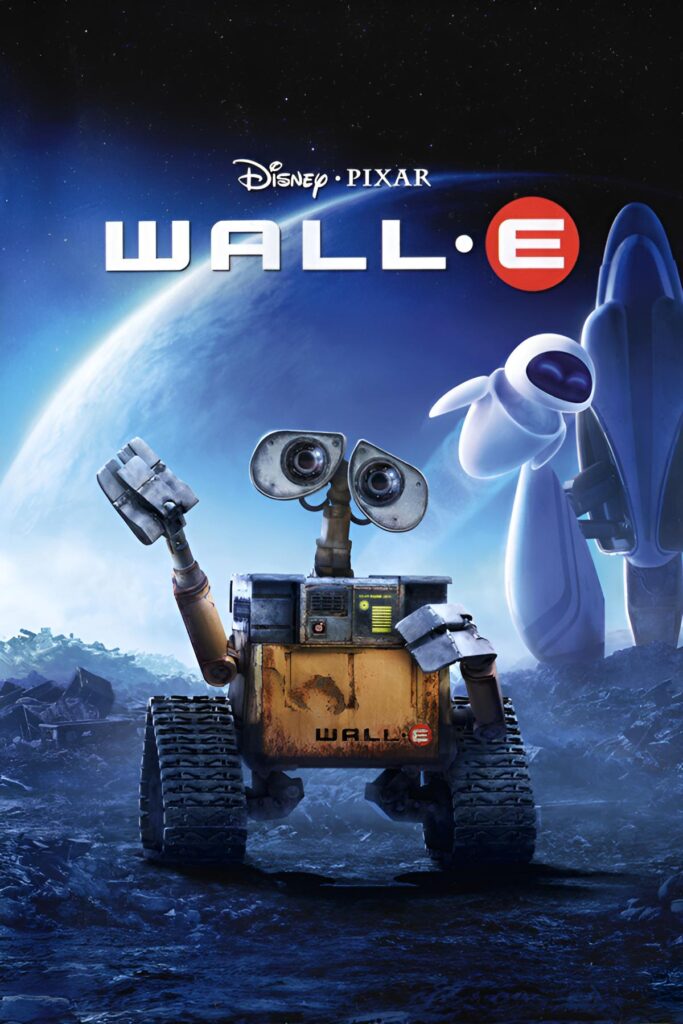
Released in 2008, WALL·E arrived during a time of accelerating consumption and technological comfort. Instead of celebrating progress, the film pauses to ask what might be lost when convenience replaces responsibility.
This is not just an animated film.
It is a meditation on attention and care.
A Brief Review
The film opens with restraint, trusting visual storytelling over explanation. Its early silence is not emptiness but intention, allowing emotion to surface without instruction.
Rather than building momentum through spectacle, WALL·E builds it through observation. Small gestures , collecting objects, repeating routines, reaching out , carry emotional weight. The film’s simplicity becomes its strength.
The experience feels patient, reflective, and unexpectedly intimate.
Short Story Summary
Set on an abandoned Earth overwhelmed by waste, the story follows a solitary robot left behind to clean up what humanity discarded. His days are repetitive, marked by quiet curiosity and a growing sense of loneliness.
When another robot arrives, carrying a different purpose, their interaction introduces possibility , not just of companionship, but of renewal. What follows is a journey that shifts from survival to responsibility, moving beyond individual connection to collective consequence.
The narrative unfolds gently, letting meaning accumulate rather than announce itself.
The Hands Behind the Film
Directed by Andrew Stanton, WALL·E reflects a confidence in visual storytelling rarely seen in modern animation. Stanton allows emotion to emerge through framing, rhythm, and restraint.
Music plays a crucial role in shaping memory and feeling, guiding the audience through silence rather than overwhelming it. The film’s technical craft is precise, but never showy.
Every choice serves clarity.
Characters and Emotional Presence
Though largely non-verbal, the characters express interiority through motion and timing. WALL·E embodies curiosity and care, while his counterpart represents purpose shaped by design.
Their relationship develops without exposition, relying on trust built through repetition and gesture. The absence of dialogue makes the connection feel earned rather than performed.
Emotion arises from attention, not declaration.
Why It Stays
WALL·E stays because it asks a quiet but urgent question.
It wonders:
- What happens when we stop paying attention?
- Can care be learned again?
- Is responsibility something we remember or rediscover?
The film does not condemn humanity outright.
It invites reflection.
Years later, WALL·E continues to resonate because its warning is gentle and its hope restrained. It suggests that change begins not with grand action, but with noticing , and choosing to care.
That quiet conviction is why the film endures.