Thalapathy is a film built around emotional extremes , abandonment and attachment, rage and restraint, solitude and loyalty. Beneath its scale and intensity lies a deeply personal story about where a man chooses to belong when the world offers him none.
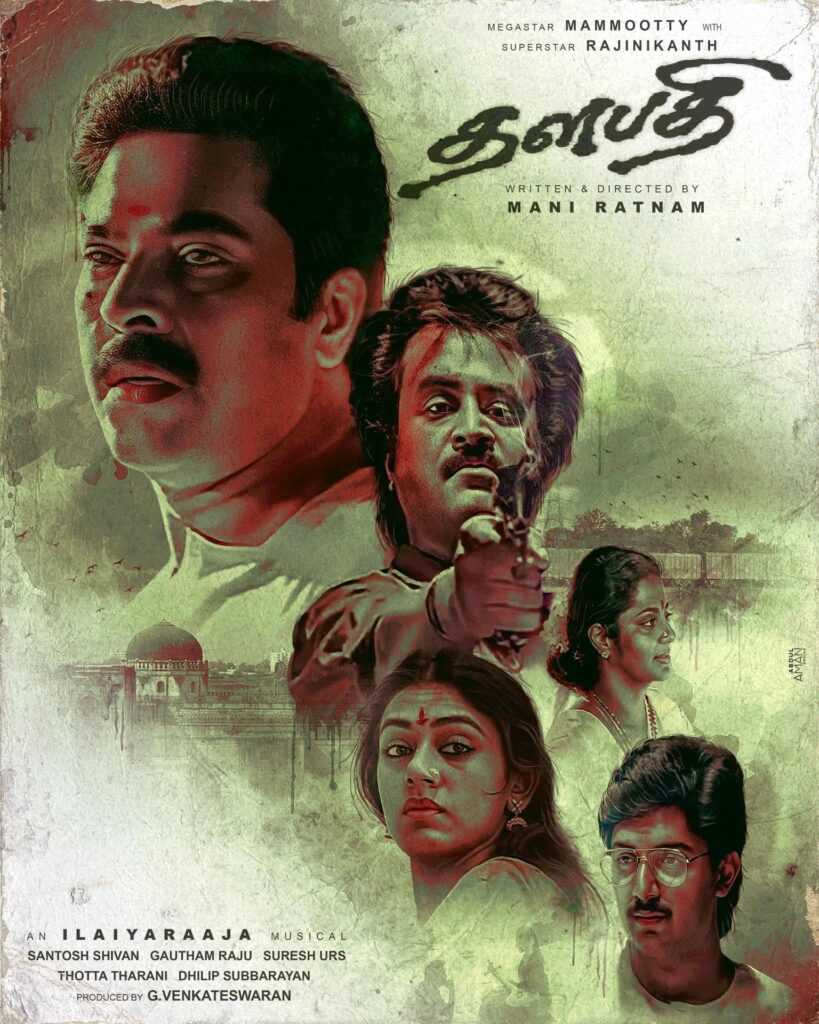
Released in 1991, the film marked a turning point in Tamil cinema, blending mythic structure with urban realism. It does not ask for sympathy easily. Instead, it demands that we sit with contradiction.
This is not a film about righteousness.
It is a film about alignment.
A Brief Review
The film carries a heightened emotional register, but never loses its centre. Its intensity feels earned, shaped by character rather than circumstance. Conflict emerges not from misunderstanding, but from deeply held convictions that cannot coexist peacefully.
The pacing allows relationships to breathe, especially the central bond that anchors the narrative. The result is a film that feels operatic in scale, yet intimate in its emotional focus.
Story and it’s Core
The story follows a man shaped by abandonment, growing up on the margins of society with anger as both shield and weapon. His path intersects with a powerful figure who offers him recognition, purpose, and belonging.
What develops between them is not mere alliance, but profound loyalty , a bond that begins to resemble destiny. As power, morality, and violence converge, the protagonist is forced to confront the cost of choosing loyalty over peace.
The film charts this journey without simplifying it, allowing consequences to unfold without moral reassurance.
The Hands Behind the Film
Directed by Mani Ratnam, Thalapathy reflects a filmmaker interested in emotional architecture as much as narrative. Mani Ratnam frames conflict through relationships, not ideology.
Music by Ilaiyaraaja deepens the film’s emotional undercurrent, using melody and silence to express what characters cannot articulate.
The film’s visual language supports its mythic undertone while remaining grounded in lived experience.
Characters and Emotional Gravity
Rajinikanth brings controlled intensity to the central role, portraying a man whose violence is born from deprivation rather than cruelty. His performance balances fury with vulnerability.
Mammootty delivers a composed, commanding presence, embodying authority shaped by conviction rather than impulse. The relationship between the two men forms the film’s emotional spine.
Their bond is built on mutual recognition , and it is this recognition that ultimately becomes both strength and burden.
Why It Stays with Us
Thalapathy stays because it understands loyalty as a double-edged emotion.
It asks:
- What do we owe those who give us belonging?
- Can loyalty survive moral conflict?
- Is violence justified when it grows from neglect?
The film does not resolve these questions neatly.
It allows them to coexist.
Decades later, Thalapathy endures because it speaks to a universal tension , the need to belong, and the price that belonging sometimes demands.
That unresolved tension is its lasting power.
Like Anniyan, Thalapathy also considered one of the landmark films in Tamil.
Nicely written
Good reflection